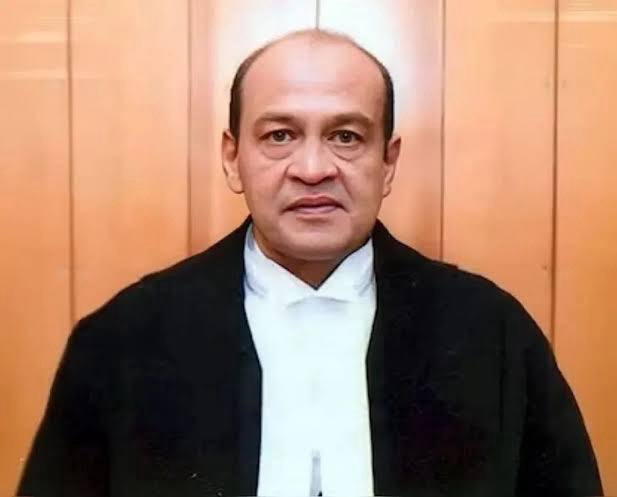
The controversy surrounding Justice Varma has taken turns that are quite unprecedented and largely unknown. Following allegations that a substantial amount of cash was found at Justice Varma’s residence, then Chief Justice of India (CJI) Justice Khanna constituted an In-House Committee comprising three Chief Justices of High Courts to inquire into the matter. The committee found Justice Varma guilty of the charges and recommended his removal. Justice Khanna subsequently forwarded this report to the Prime Minister. Based on the report, the government is now set to initiate impeachment proceedings against Justice Varma on 21st July.
Amidst these developments, Justice Varma filed a writ petition before the Supreme Court on 18th July, challenging the legal sanctity of the In-House Committee.
In light of the findings and recommendations of the In-House inquiry, pertinent questions arise: Should Justice Varma have resigned by now? Should he be allowed to continue discharging judicial functions? These questions may necessitate subjective satisfaction of those who aspire to answer them
The Sole Constitutional Procedure for Judicial Removal
Impeachment is the only procedure prescribed under the Constitution of India for the removal of a Supreme Court or High Court judge. As per Article 124(5) read with Section 3 of the Judges (Inquiry) Act, 1968, an impeachment motion must be initiated by 100 Members of Parliament (MPs) in the Lok Sabha or 50 MPs in the Rajya Sabha.
Once the motion is submitted, the Speaker or Chairman, after consulting such persons as they deem fit and considering any available materials, may admit or reject the motion. Upon admission, a three-member committee is constituted comprising:
• The Chief Justice of India (or a sitting Supreme Court judge),
• A Chief Justice of a High Court, and
• A distinguished jurist.
This committee frames definite charges and conducts an investigation. It then submits a report to the Speaker or Chairman—or both, in case of a joint committee—detailing its findings on each charge along with observations.
If the committee finds the judge guilty of misbehaviour or incapacity, the motion is taken up for debate and voting in Parliament. This process, as laid down in the Constitution and the 1968 Act, is the only legally valid method for the removal of a judge.
Legality of the In-House Inquiry and its Consequences
In this context, the formation of the In-House Committee and the forwarding of its report to the Prime Minister raises serious constitutional questions. The In-House Committee lacks statutory backing and exists merely as an internal mechanism of the judiciary. It does not have the legal sanctity of a committee constituted under the Judges (Inquiry) Act, 1968.
Additionally, Justice Khanna arguably erred in forwarding the report to the executive, bypassing the constitutionally designated process involving Parliament. Impeachment is a constitutional function entrusted to Members of Parliament—not the government.
In the writ petition filed by Justice Varma, he challenges not only the jurisdiction of the In-House Committee but also the validity of its findings. According to sources, the report has not been made available to MPs, yet it is set to serve as the foundation for initiating impeachment proceedings. This lack of transparency adds further complexity.
Three Key Constitutional Questions Arising
These facts and circumstances raise several crucial constitutional issues beyond those addressed in the writ petition:
1. Was CJI Khanna justified in sending the In-House Committee report to the Prime Minister?
Given that the Prime Minister or the executive has no role in the removal of a judge under the Constitution, this act oversteps the bounds of judicial propriety and invites undue political involvement.
2. Should the government initiate the impeachment motion?
Initiating impeachment based on a report that lacks statutory backing could set a dangerous precedent. It opens the door for future governments to rely on non-binding inquiries—possibly politically influenced—to trigger constitutional processes against judges.
3. If a motion for impeachment is moved under Section 3 of the Judges (Inquiry) Act, 1968, and a committee is constituted under Section 4 to inquire into the matter, will such an inquiry remain unaffected by the findings of the existing In-House Committee?
This is a critical concern. Once a committee has already found the judge guilty and the findings have been publicized (at least informally), it becomes extremely difficult to nsure that a subsequent statutory inquiry is not prejudiced.
Conclusion
While the report of the In-House Committee is not binding on Parliament—unlike the report of a committee constituted under Section 4 of the Judges (Inquiry) Act, 1968—it may still influence the impeachment process. However, it may be prudent for the Supreme Court to refrain from passing any judgment on the report’s merit in the writ petition.
Despite lacking legal sanctity, the In-House Committee report has already served a political and moral function. The writ petition may, ultimately, serve little practical purpose and is unlikely to obstruct the impeachment.
Unfortunately, morality—while crucial in public life—does not form a legal basis for issuing writs against those who have failed in their constitutional obligations. Perhaps this is because those entrusted with these duties were never expected to part ways with morality in the first place.
 Right & Reason